Radio & SDR
Explore the invisible world around us. Learn antennas, tune a software-defined radio, visualize a spectrum and turn signals into sound, data or art.
Tune · listen · discover The Lost Club
Proposed for the Milwaukee area
The answer is buried in the static.
An open third space for art, radio, technology and invention. Reuse old tech. Print a new part. Tune into something unexpected. Bring an idea and find people to explore it with.
No idea is too dumb to explore.
Explore the invisible world around us. Learn antennas, tune a software-defined radio, visualize a spectrum and turn signals into sound, data or art.
Tune · listen · discoverSorted computers, useful components, cables and odd discoveries. A place to find the part you need and give usable equipment another life.
Recover · sort · recirculateDiagnose a donated PC, replace a failed part, learn to solder or rebuild a machine with someone who knows where to start.
Fix it · understand itDesign a replacement, test an enclosure or turn a sketch into something you can hold. Printers and practical tools for learning by making.
Design · print · testSensors, lights, automation, strange little machines. Put inexpensive electronics and recovered parts to work on ideas of your own.
Connect · code · experimentExplore how sorted plastic can become useful material, including the equipment and process control needed for recycled printing filament.
Identify · process · testBuild sculptures from salvaged parts, experiment with light and sound, or mix code with physical materials. Artists and technologists sharing the same benches.
Imagine · make · shareKids learning with mentors, tinkerers trading knowledge, project nights and show-and-tell. Beginners should have a reason to walk through the door.
Ask · try · share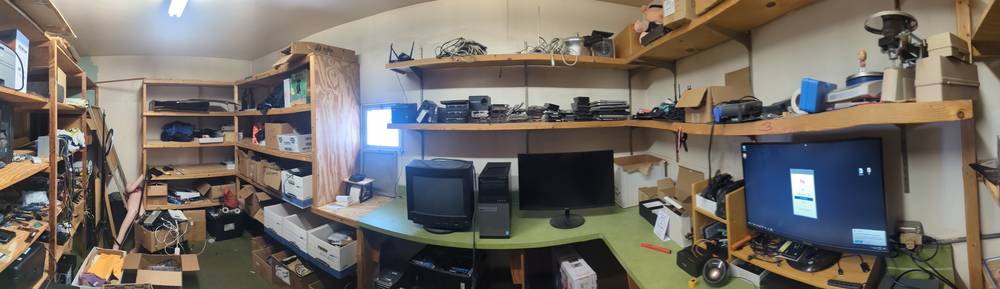
Rick Koston has old PCs, 3D printers, tools, equipment and microcontrollers to contribute. The next step is to organize that collection, bring other makers into the project and find a space where it can do more good.
This is a place for exploration and experimentation: useful repairs, unexpected inventions and projects that start with “could we make this?”
Usable electronics deserve another round. The proposed model combines carefully selected donations, refurbishment, parts recovery and a workshop where those parts become new projects.
Sales of repaired electronics, useful parts and things made in the workshop could help pay the bills. Classes, recurring supporters, sponsorships and grants could contribute too. The goal is to fund open community time and put the surplus back into the space. Each activity needs a practical budget; sales alone are not yet a proven funding model.
Precious Plastic offers a starting point for learning about local material reuse. Recycled filament is a process to develop: identify and sort suitable plastics, shred and dry them, then control extrusion, cooling, winding and filament diameter.
That makes a materials lab a worthwhile part of the idea. Start with what the equipment and safe processes can support, test the results and share what works.
An unused building could become a destination for making, learning and putting things back to work.
We're looking across the Milwaukee area for a municipal partner willing to explore free use or a nominal-rent renewable lease. A workshop, former commercial space or other suitable building could be the starting point.
We would bring equipment, recruit makers and mentors, and develop a cleanup and renovation plan together. The ambition is a place residents have regular reasons to visit, with a character and purpose the host community can make its own.
Discuss a buildingPC rescue, soldering, first prints and microcontroller builds. Help shape small classes and regular tinkering sessions.
Classes & calendarKnow a building? Want to mentor, tinker or help organize? Have equipment that could belong here? Tell Rick what you're thinking.
rickkoston@gmail.com
Rick Koston · Founder
Please arrange equipment offers first. There is no public drop-off location yet.